

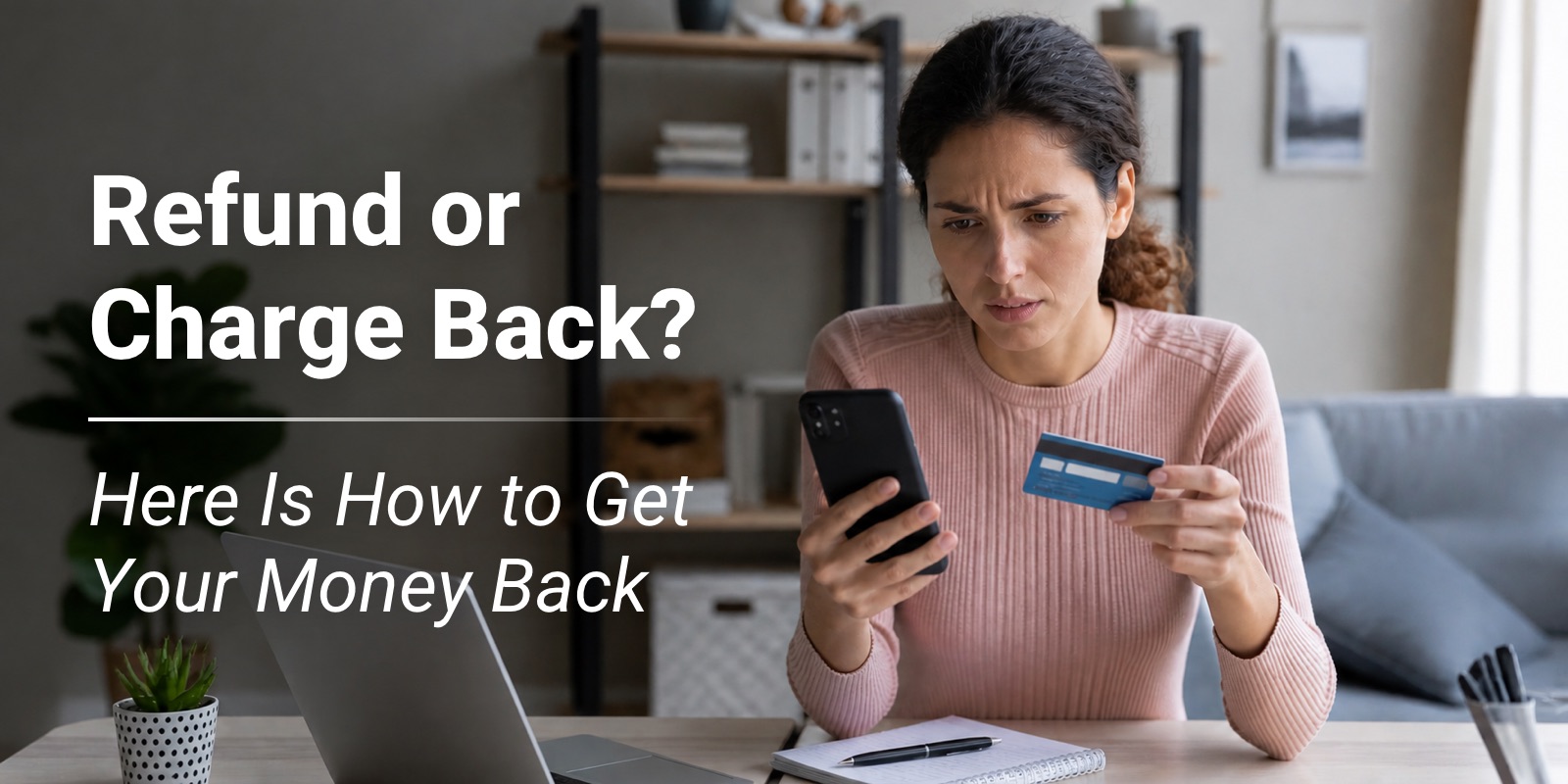
When a purchase goes wrong, most shoppers either wait too long hoping it resolves itself or jump straight to a charge back before giving the refund process a real chance. Understanding charge back vs refund as a sequence rather than a choice is what actually gets your money back faster and keeps your accounts in good standing while it happens.
Start Here: The Refund Route
A refund is always the right first move. Contact the retailer directly, explain the issue clearly, and give them a reasonable window to fix it. Most legitimate retailers resolve straightforward disputes within a few days.
When you contact the seller, be specific. State what you ordered, what went wrong, what resolution you want, and when you need it by. Vague complaints get slower responses. A clear, documented request gets treated as a real case.
Keep a record of every interaction. Screenshots of chat conversations, copies of emails, and timestamps on your contacts create the paper trail you will need if the situation escalates. Even if the refund resolves easily, the documentation costs nothing to keep.
When the Refund Stalls
If the retailer does not respond within their stated customer service window, follow up once in writing. A second documented contact gives you a stronger case later and sometimes prompts action when the first message did not.
If you ordered through a platform like Amazon, eBay, or Etsy, use the platform’s own dispute resolution system before going outside it. These systems are designed to mediate between buyers and sellers and often resolve issues faster than direct contact alone. Most platforms have a window for opening a case, typically 30 to 90 days from the order date, so do not wait indefinitely before using them.
The refund route has run its course when the retailer has denied your request, gone silent after multiple contacts, or is no longer reachable. That is the moment to move to the next step.
The Charge back: What It Is and When to Use It
A charge back is a dispute filed with your bank or card issuer, asking them to reverse the transaction on your behalf. It is a consumer protection mechanism, not a shortcut, and it works best when used correctly.
Valid reasons for a charge back include being charged for goods you never received, receiving something materially different from what was described, being charged without authorization, or dealing with a retailer that has closed and cannot process your refund.
Contact your card issuer by phone or through their app and ask to dispute the charge. Have your documentation ready: the original order confirmation, screenshots of the product listing, records of your refund attempts, and any communication with the seller. The Consumer Financial Protection Bureau outlines your rights in detail and is worth reviewing before you call.
Most card issuers allow charge backs within 60 to 120 days of the transaction date, depending on the card network. Do not let that window close while you are still waiting for a refund that is clearly not coming.
Why the Sequence Matters
Filing a charge back before attempting a refund is called friendly fraud, and the consequences are real. Retailers can flag your account, cancel your membership, or ban future purchases when a chargeback bypasses their return process. Some do this automatically through fraud detection systems.
On top of that, card issuers expect you to have tried resolving the issue with the merchant first. Skipping that step gives the retailer an easy opening to contest the dispute, and without proof of that prior attempt, the decision will most likely go against you.
The sequence is not technical. It is what makes the process work: refund attempt first, platform dispute if applicable, charge back as the final escalation.
Earning Money Back Before Anything Goes Wrong
Disputes and charge backs are tools for recovering from a bad purchase. The better habit is building something that puts money back in your pocket on every purchase that goes right, which is most of them.
Shopping through RebatesMe earns cash back automatically on purchases at verified retailers across a network of 3,000 plus partners. The earnings post to your account on a predictable schedule, with no disputes, no waiting, and no customer service queues.
The RebatesMe browser extension activates the cash back step automatically when you land on a participating retailer’s page. One click before checkout, and the earnings happen in the background while you shop as normal.
Charge back vs refund is not a coin flip. It is a ladder with a clear sequence, and working through it in order saves time, protects your accounts, and improves your odds of a successful resolution at every step. Handle the refund first, escalate when it genuinely stalls, and build the habit of earning cash back on every purchase that goes smoothly. That combination covers both sides of smarter shopping.