

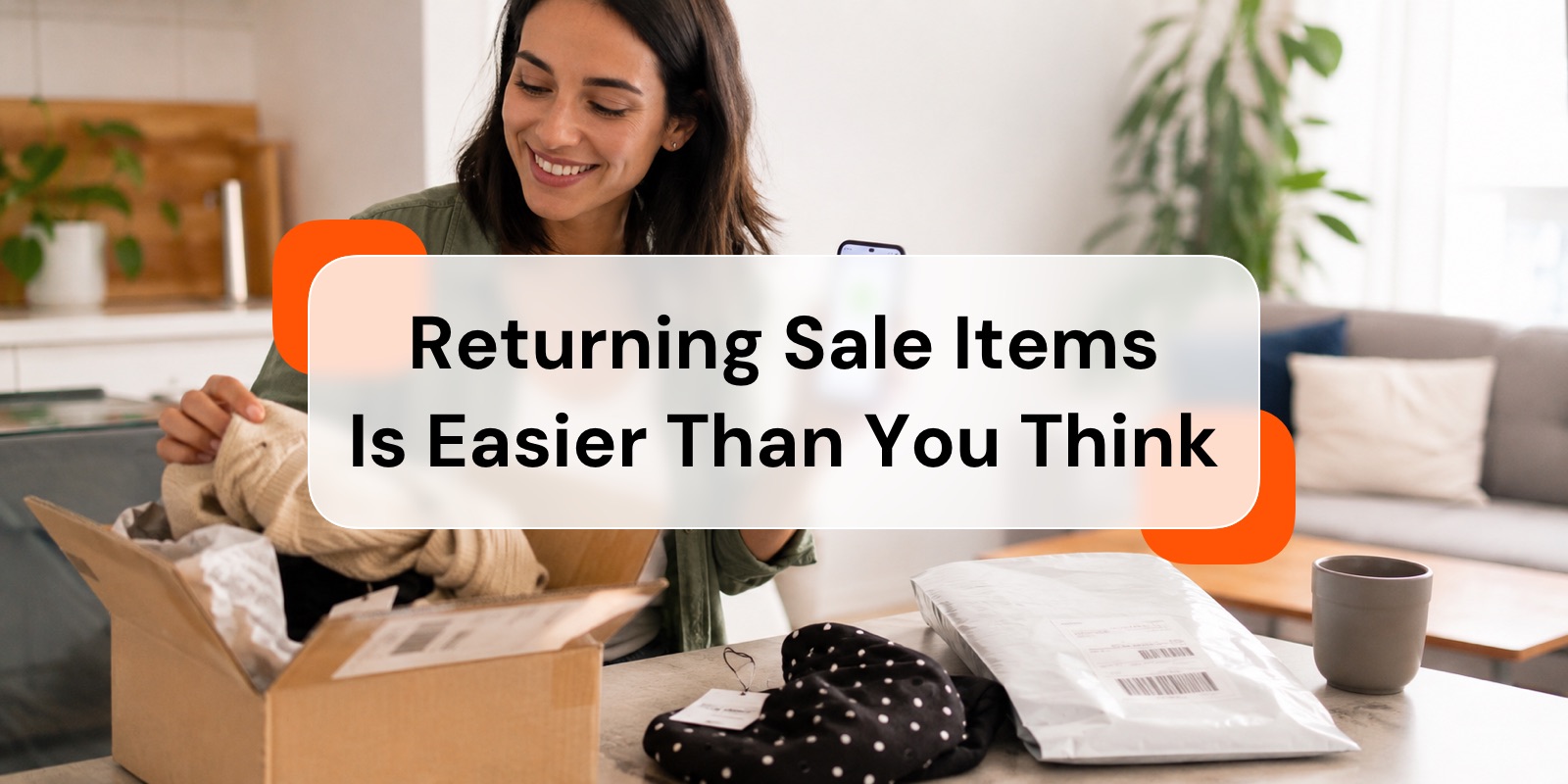
Most people who buy something on sale and regret it never try to return it. Not because they checked the policy and got denied, but because they assumed it was pointless. That assumption is wrong more often than not, and it costs shoppers real money every time they talk themselves out of trying. Here is what actually happens when you return a sale item, and how to make it go smoothly.
The Policy Is Probably Not What You Think It Is
The most common belief about sale items is that they are final sale. That is simply not true at most major retailers. Final sale is a specific designation that must be stated explicitly, either on the product page, on the price tag, or on the receipt. If you did not see those words, the item almost certainly falls under the store’s standard return policy.
A clearance price does not automatically mean no returns. A discount code does not mean no returns. Even a doorbuster deal does not mean no returns unless the retailer said so in writing at the point of purchase.
Whether you can return items bought on sale depends on one thing: whether the retailer labeled them as a final sale. Everything else is negotiable more often than shoppers realize.
What to Have Ready Before You Go
Whether you’re returning in-store or by mail, walking in prepared makes every part of the process faster and gives you a stronger position if any questions come up.
Bring or locate these before you start:
- Your order confirmation email. This shows the purchase date, the price you paid, and the item description. For online purchases, this is your receipt.
- The original packaging. Not always required, but always helpful. Items returned in original packaging are less likely to face scrutiny.
- The payment method you used. Refunds almost always go back to the original form of payment. Know which card or account to expect it on.
- The retailer’s return policy pulled up on your phone. Having the actual policy language available is the single most effective tool if a staff member pushes back incorrectly.
You do not need to justify why you are returning something. You do not need to have a defect to point to. “It didn’t work for me” is a complete sentence.
How to Handle the Three Most Common Pushbacks
Even when a return is entirely valid, you may hear one of these responses. Here is how to handle each one without backing down.
“This item was on sale, so it’s a final sale.” Ask them to show you where that was communicated at the time of purchase. The final sale designation must be stated explicitly. If it was not on the product page, the tag, or your receipt, this pushback has no policy behind it. Politely say: “I didn’t see any final sale designation when I purchased this. Can you show me where that’s stated in the return policy?”
“We can only offer store credit, not a refund.” This is sometimes legitimate and sometimes a default script. Check the return policy language you have pulled up. If the policy says refund to the original payment method, ask for that specifically. If store credit is all they offer for sale items, that is still a win over keeping something you do not want.
“The return window has passed.” This one may be accurate, which is why checking the return window before you try is worth doing. However, many retailers extend return windows during holiday periods or for loyalty members. It is always worth asking whether an exception can be made, particularly if the window just closed within the last few days.
If a staff member cannot resolve your issue, ask for a manager without frustration or an escalated tone. A calm, factual request gets better results than an emotional one.
When It Genuinely Is a Final Sale
Some items really are non-returnable, and knowing that in advance saves you the trip.
Swimwear and intimate apparel are frequently marked final sale for hygiene reasons. Heavily personalized or monogrammed items typically are too. Some beauty products, particularly those with a broken seal, may not qualify. And as covered in most major retailers’ policies documented by the Better Business Bureau, digital goods and activated gift cards are almost universally final sale.
If you are buying something in one of these categories on sale, check the fine print before you commit. It takes less than a minute.
How Cash Back Changes the Math on Sale Purchases
Even when a return goes through, you usually get back what you paid. What you do not automatically recover is the time and effort of the return itself. The better long-term move is to make sure every sale purchase you make already has a cash back layer working underneath it.
If you shop through RebatesMe before buying that sale item, you earn cash back on the discounted price at checkout. If the return goes smoothly, great. If it doesn’t, or if you get a partial refund, the cash back you’ve already earned softens the outcome. You’re not starting from zero.
The RebatesMe browser extension handles this automatically by alerting you when you’re on a partner retailer’s site, so activating cash back before a purchase becomes a reflex rather than a step you have to remember under the excitement of finding a deal.
Can you return items bought on sale? In most cases, yes, and with far less resistance than you expect if you go in prepared and know your ground. The assumption that “sale” means “stuck” is exactly what retailers count on. Check the policy, bring your confirmation, and ask clearly for what you’re owed. And next time you spot a sale worth buying, activate cash back first so whatever happens with the purchase, you’ve already put something back in your pocket.