
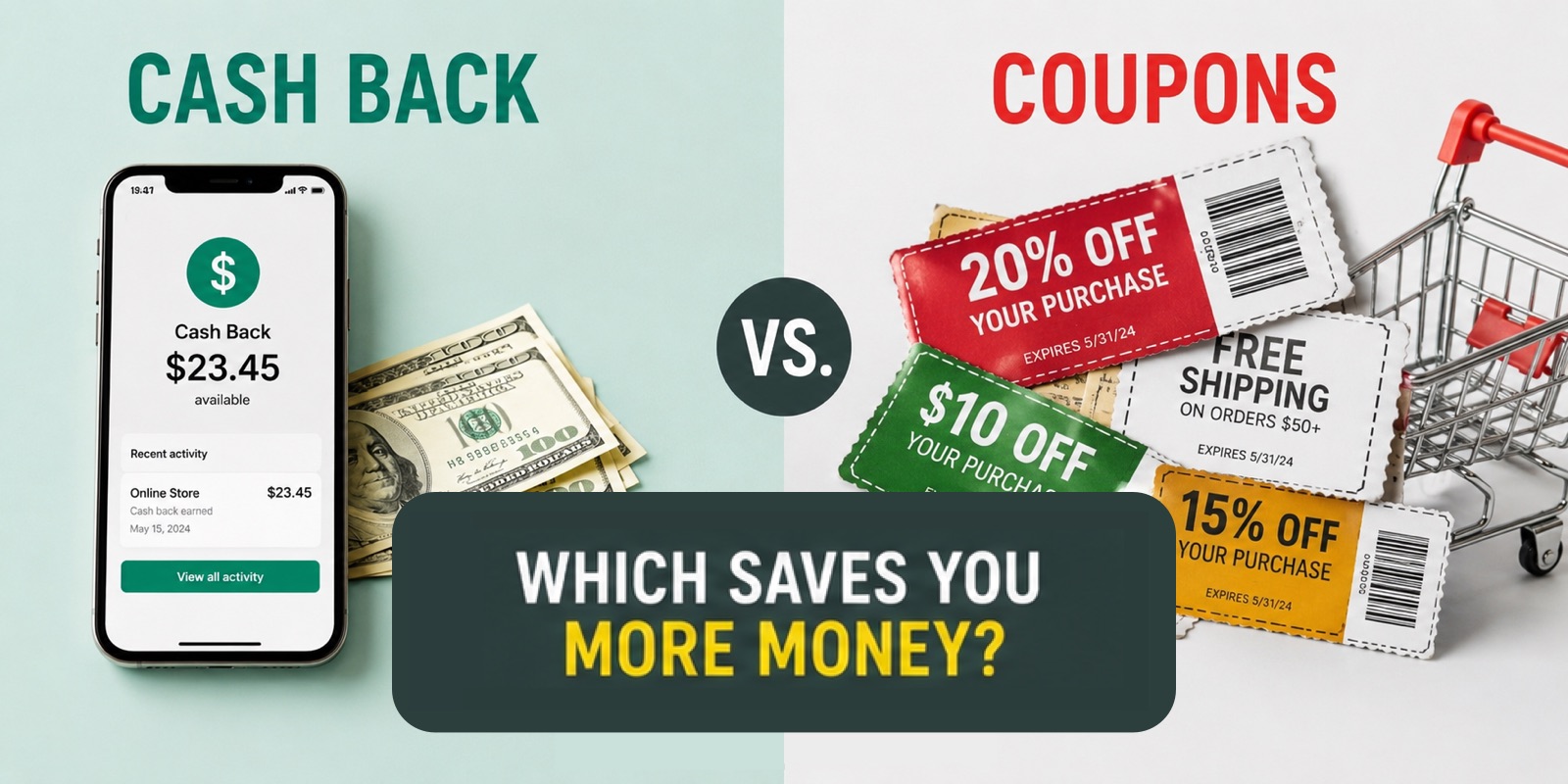
If you’ve ever wondered what cashback is and how it actually stacks up against a good coupon, you’re not alone. Most shoppers treat them like a choice. They’re not. One reduces your price before you pay. The other pays you back after. And when you use them together, the math gets a lot more interesting.
What Is Cashback, Exactly?
Cashback is money you earn back after making a purchase, usually as a percentage of what you spent. It’s not a discount. It’s not a promo code. It’s more like a rebate that automatically lands in your account.
Here’s how it works in practice: you click through a cashback portal like RebatesMe before shopping at a participating retailer. That click creates a trackable link. When you complete your purchase, the retailer pays a small commission to the portal, and the portal shares a cut of that with you. No clipping, no codes, no extra steps at checkout.
The rates vary. Everyday categories like clothing, beauty, and home goods often sit between 3% and 10%. Some retailers run promotional rates that climb higher. Over a full year of regular shopping, those percentages add up to a number most people don’t expect to see until they do.
What Coupons Do That Cashback Can’t
Coupons are immediate. You apply a code, the price drops, and you see the savings right there on the order summary before you even hit confirm. That instant feedback is satisfying, and for big-ticket purchases where you need the price to come down right now, a coupon does something cashback cannot.
Coupons also stack well with sales. A 20% off code on top of a clearance price is a different kind of win than waiting for a cashback deposit. If you’re working with a tight budget at the moment, that matters.
The downside is effort. Good coupons require hunting. They expire. They have exclusions. And for everyday purchases under $50, the code that actually works can be harder to find than the savings are worth.
What Cashback Do Those Coupons Can’t
Cashback works quietly in the background on purchases where no coupon exists. Most online orders don’t have a working promo code floating around. Cashback doesn’t care. If the retailer is a portal partner, you earn regardless.
It also compounds. A 6% cashback rate on $200 a month in regular online shopping is $144 a year, earned on things you were buying anyway. No hunting required.
According to a Rakuten Intelligence report, billions in cashback earnings go unclaimed every year simply because shoppers don’t activate the portal before they shop. The purchase happens. The earning opportunity doesn’t.
The Real Answer: Use Both at the Same Time
Here’s the part most comparison articles skip. Coupons and cashback are not either/or. They serve different moments in the same transaction, and most portals allow both on the same order.
A real example: you find a 15% off code for a $120 jacket. That brings it to $102. You also click through RebatesMe before checkout and earn 8% cashback on the $102 purchase. That’s another $8.16 back in your account. Total saved: $26.16 on one order, in about 30 extra seconds of effort.
Do that over a year of regular shopping, and the difference between “I use coupons” and “I use coupons and cashback” can easily reach $300 – $400. Same purchases. Same stores. Just both tools instead of one.
How to Make the Stack a Habit Without Thinking About It
The only friction in this system is remembering to activate cashback before you shop. That’s a real problem when you’re busy, which is most of the time.
The RebatesMe browser extension removes that friction entirely. It detects when you land on a partner retailer’s site and alerts you automatically. You don’t have to remember to open a portal. You don’t have to check a list. It just tells you when there’s money on the table, and you decide whether to grab it.
Pair that with your existing habit of checking for a promo code before checkout, and the stack becomes second nature fast.
Cashback and coupons are not competing strategies. They solve different parts of the same problem, and the shoppers who treat them as a team consistently save more than those who pick a side. Start with whatever you’re already doing, and just add the other layer. Thirty seconds of habit, real money over time.